

Latest Apr 02, 2026 Real Introduction-to-IT Exam Dumps Questions Valid Introduction-to-IT Dumps PDF
WGU Introduction-to-IT Exam Dumps - PDF Questions and Testing Engine
WGU Introduction-to-IT Exam Syllabus Topics:
| Topic | Details |
|---|---|
| Topic 1 |
|
| Topic 2 |
|
| Topic 3 |
|
| Topic 4 |
|
| Topic 5 |
|
NEW QUESTION # 14
When would a business intelligence (BI) system be useful in making a decision?
- A. When figuring out when to reorder store inventory for a particular stock keeping unit (SKU)
- B. When deciding if a restaurant should use more organic food in its menu, based on customer reviews and an analysis of current costs
- C. When deciding whether to promote an employee by looking at their annual sales performance
- D. When determining the average salary of the company's executives
Answer: B
Explanation:
A BI system shines in this scenario because it leverages the power of data from various sources and turns that into actionable insights:
*Customer Sentiment Analysis: BI systems can incorporate natural language processing to analyze customer reviews, gauging sentiment and preferences towards organic food. Trends and patterns can be identified.
*Cost Analysis: BI can pull in data on ingredient costs (organic vs. conventional), preparing a comprehensive analysis of how switching to more organic food would impact operational expenses.
*Decision Support: By combining customer sentiment, cost analysis, and potentially market trends (through external data integration), a BI system can provide a holistic view of the trade-offs and the potential impact of increasing organic food usage.
NEW QUESTION # 15
What is the component of the data-information-knowledge-wisdom DIKW hierarchy that focuses on application?
- A. Wisdom
- B. Data
- C. Information
- D. Knowledge
Answer: D
Explanation:
Knowledge is the DIKW component that focuses on application. In Information Technology, knowledge is often described as information that has been understood, combined with experience, rules, procedures, and context so that it can guide action. While information answers questions like who, what, where, and when, knowledge supports how to do something and how to solve a problem. For example, in infrastructure administration, information could be the list of server performance metrics, while knowledge includes understanding how to interpret those metrics and apply troubleshooting steps to restore normal operation.
Data is raw and unprocessed, and information is processed data that has meaning in context. Wisdom is the highest level and involves judgment about what should be done, including ethical and strategic considerations.
Knowledge sits between information and wisdom and is closely linked with practice, skills, and the ability to apply what is known to real tasks. Therefore, the DIKW level that focuses on application is knowledge.
NEW QUESTION # 16
What is true about an operating system?
- A. It is a software program that directly supports the computer itself.
- B. It is a firmware burned onto the computer mother board.
- C. It is a hardware component of the computer system.
- D. It is an application program similar to word processors.
Answer: A
Explanation:
An operating system (OS) is a crucial component of the computer system. It is not firmware, which would be embedded into the hardware (eliminating option A), nor is it an application program like a word processor (eliminating option B). It is also not a hardware component (eliminating option D). Instead, an operating system is system software that manages computer hardware and software resources and provides common services for computer programs. This includes managing processes, memory, files, security, and input/output operations. The OS acts as an intermediary between applications and the computer hardware, making it possible for other software to run on the computer.
References:
*Operating system definition from OxfordDictionaries1.
*Wikipedia article on Operating Systems2.
*Guru99's explanation of what an Operating System is3.
*How-To Geek's description of an Operating System4.
NEW QUESTION # 17
An Instructor delivers a quiz to the students in a class, assigns a grade to each quiz, and determines the minimum, maximum, and average grade. When the quizzes are returned, the students receive the average differential for each grade.
Which content is considered data in this scenario?
- A. The grade for each quiz
- B. The average differential for each quiz
- C. The minimum and maximum grade for all quizzes
- D. The average grade for all quizzes
Answer: A
Explanation:
In this scenario, the grade for each quiz is considered data. Each student's specific score represents a discrete piece of information, and collectively, these individual grades form the dataset that the instructor analyzes to calculate the minimum, maximum, and average grades1. The other options (average differential, minimum and maximum grade for all quizzes, and average grade for all quizzes) are derived metrics or summaries based on this raw data2.
NEW QUESTION # 18
What does a router do?
- A. Provides services, such as website hosting and routing, for various devices
- B. Converts incoming analog data into digital and outgoing digital data into analog
- C. Manages traffic by maintaining a table of known devices on the network
- D. Extends the cable range and allows connections to be made by increasing the signal strength
Answer: C
Explanation:
A router manages network traffic by using a routing table to determine where data packets should be sent. In Information Technology networking, a router connects different networks, such as a home local network and the internet, and forwards packets based on destination IP addresses. The routing table contains information about known networks and the best path to reach them. This allows the router to direct traffic efficiently between networks and to serve as a gateway for devices on a local area network. Option A describes a server, which provides services like hosting websites or applications. Option C describes a repeater, which boosts or regenerates signals to extend cable distance. Option D describes a modem, which modulates and demodulates signals to convert between analog and digital forms for transmission over certain media. While modern home routers may also include switch and wireless access point features, the core routing function is traffic management using routing information. Therefore, the correct answer is the option describing maintaining a table and managing traffic, which is option B.
NEW QUESTION # 19
What is the hardware component that contains soldered parts and slots for other pieces of hardware that can be removed?
- A. Hard drive
- B. System clock
- C. Motherboard
- D. Expansion bus
Answer: C
Explanation:
The motherboard is the main circuit board in a computer that contains soldered components and provides slots and connectors for removable hardware. In Information Technology hardware fundamentals, the motherboard holds essential components such as chipset circuitry, connectors, and sometimes integrated devices like audio or network controllers. It also provides sockets and slots for components that may be installed or replaced, such as the CPU socket, RAM slots, and expansion slots like PCIe for graphics cards or other add-on cards.
The motherboard includes pathways called buses that enable communication among the processor, memory, storage, and peripheral devices. A hard drive is a storage device and does not serve as the central board for system components. The system clock is a timing mechanism, not a physical board containing multiple slots.
An expansion bus refers to a communication pathway standard, not the full board that hosts multiple connectors and soldered parts. Therefore, the component described is the motherboard.
NEW QUESTION # 20
A programmer is working with Perl. Which type of language is this?
- A. Compiled
- B. Assembly
- C. Interpreted
- D. Machine
Answer: C
Explanation:
Perl is generally categorized as an interpreted language. In Information Technology, Perl is a scripting language that is commonly executed by the Perl interpreter, which reads the source code and runs it without requiring a separate compilation step that produces a standalone executable in the typical compiled-language workflow. This makes Perl useful for tasks such as text processing, automation, system administration scripting, and rapid prototyping. Interpreted execution supports quick testing and modification because developers can run scripts immediately after editing. While some interpreted languages can be compiled into intermediate bytecode or packaged into executables, the standard and most widely taught model for Perl is interpreter-based execution. Assembly language is a low-level mnemonic representation of machine instructions, and machine language is binary code executed directly by the CPU. Perl does not fit those categories. Compared to compiled languages like C, Perl emphasizes flexibility and scripting convenience.
Therefore, the correct classification for Perl in this context is interpreted language.
NEW QUESTION # 21
The primary database application used by a company is having issues, specifically with the layer that alters the database after receiving a request. What is the name of this layer of the database application?
- A. The application layer
- B. The object-oriented layer
- C. The database management layer
- D. The flat-file layer
Answer: C
Explanation:
The layer responsible for altering a database after receiving a request is the database management layer. In standard database architecture, the database management system acts as the software layer that processes requests, enforces rules, and performs operations such as insert, update, and delete. When an application or user submits a query or transaction, the database management layer interprets the request, checks permissions and constraints, manages concurrency so multiple users can work safely, and then applies changes to the stored data. It also helps ensure reliability through transaction controls such as commit and rollback, which protect data integrity when failures occur. The application layer is where the user interface and business logic typically run, but it does not directly manage the physical storage and controlled updates of the database. The flat-file layer is not a standard layer in modern database applications, and object-oriented layer refers to a programming design style rather than the core DBMS component. Therefore, the correct layer is the database management layer.
NEW QUESTION # 22
What is the primary role of the database administrator?
- A. DBMS installation, maintenance, performance analysis, and troubleshooting
- B. Operating system throughput and performance optimization
- C. Business system design and development
- D. Internet security access control
Answer: D
Explanation:
The core responsibility of a database administrator (DBA) centers around managing and optimizing Database Management Systems (DBMS). This includes:
*Installation and Configuration: Setting up new database instances, applying relevant configurations, and ensuring they align with the organization's needs.
*Maintenance: Performing regular backups, security updates, and patch management to keep the databases secure and healthy.
*Performance Analysis: Monitoring database performance, identifying bottlenecks, and implementing optimizations to ensure efficient data retrieval and operations.
*Troubleshooting: Proactively addressing database errors, resolving operational issues, and ensuring data integrity.
NEW QUESTION # 23
Which type of communications media uses light waves to transmit data?
- A. Twisted pair
- B. Coaxial
- C. Radio towers
- D. Fiber optic
Answer: D
Explanation:
Fiber optic communication uses light waves to transmit data. Here's how it works:
1.Fiber Optic Cable Structure:
oA fiber optic cable consists of a core made of glass or plastic, surrounded by a cladding layer.
oThe core acts as a light guide, allowing light to travel through it by total internal reflection.
oThe cladding layer ensures that the light remains within the core.
2.Light Propagation:
oWhen data needs to be transmitted, a light source (usually a laser or LED) sends pulses of light into the fiber.
oThe light travels down the core, bouncing off the cladding due to total internal reflection.
oAs a result, the light signal remains confined within the core.
3.Advantages of Fiber Optics:
oHigh Bandwidth: Fiber optics can transmit large amounts of data quickly.
oLow Attenuation: Light signals experience minimal loss over long distances.
oImmune to Electromagnetic Interference: Unlike copper cables, fiber optics are not affected by electromagnetic fields.
oSecure: It's difficult to tap into fiber optic cables without detection.
4.Applications:
oInternet Backbone: Fiber optics form the backbone of the global internet, connecting continents.
oTelecommunications: Used for long-distance phone calls and high-speed internet.
oData Centers: Within data centers, fiber optics connect servers and storage devices.
oCable TV: Many cable TV networks use fiber optics for signal distribution.
References:
1.Li-Fi - Wikipedia
2.Types of Transmission Media - GeeksforGeeks
3.Welcome, Li-Fi: Technology uses light to transmit data
NEW QUESTION # 24
Which item information should be stored in a database to determine a student's previous academic year's course load?
- A. Course grade
- B. Course identification number
- C. Course name
- D. Course level
Answer: B
Explanation:
To determine a student's previous academic year's course load, the most crucial piece of information is the course identification number. This unique identifier allows for the retrieval of specific data related to each course, such as the number of credit hours or units associated with the course, which directly contributes to the calculation of the course load.
Here's a step-by-step explanation of how this information is used:
1.Identify the Student: The database must have a record of the student for whom the course load is being determined.
2.Retrieve Course Records: Using the student's identification, the database retrieves all course records associated with that student for the specified academic year.
3.Use Course Identification Numbers: Each course taken by the student will have a unique course identification number.
4.Determine Credit Hours: The course identification number can be used to look up the credit hours or units for each course, as this information is typically tied to the course ID in the database.
5.Calculate Course Load: By summing the credit hours for all courses taken in the previous academic year, the student's course load can be calculated.
References: The process of determining course load and its impact on student performance is discussed in academic literature, which emphasizes the importance of course identification numbers in tracking academic progress1234.
NEW QUESTION # 25
Which part of a computer system is hardware?
- A. Kernel
- B. Random-access memory
- C. Operating system
- D. Compiler
Answer: B
Explanation:
Hardware refers to the physical, tangible components of a computer system, while software refers to programs and instructions. Random-access memory, or RAM, is hardware because it is a physical set of memory chips installed in the computer, typically on removable modules. RAM provides temporary working storage for the operating system and applications while they are running, allowing fast read and write access compared to long-term storage devices. A compiler is software that translates source code into machine code. The kernel is software and is the core part of an operating system that manages resources such as processes, memory, and device access. The operating system itself is also software that controls the computer and provides services to applications. In Information Technology fundamentals, distinguishing hardware from software is a key concept: hardware includes CPU, RAM, motherboard, storage, and peripherals; software includes the operating system, applications, and programming tools. Since RAM is a physical component, it is the correct answer for the hardware part listed.
NEW QUESTION # 26
Based on the instructions on the package, a frozen pizza should be baked for 18 minutes at 400°F. Which term describes the statement, "The pizza looks done after 16 minutes, so it should be taken out," based on the data- information-knowledge-wisdom DIKW hierarchy?
- A. Wisdom
- B. Data
- C. Information
- D. Knowledge
Answer: A
Explanation:
In the DIKW hierarchy, wisdom is the level that reflects judgment about what should be done in a specific situation. The package instruction, bake for 18 minutes at 400°F, is information because it is organized and contextualized guidance. The statement, "The pizza looks done after 16 minutes, so it should be taken out," goes beyond repeating the instruction. It uses observation and judgment to decide the best action in context.
This is characteristic of wisdom because it applies experience and situational awareness to choose an appropriate decision, even when it differs from the standard guideline. Knowledge would involve understanding how cooking time can vary based on oven performance, pizza thickness, and placement in the oven, and being able to apply techniques to manage those variables. Wisdom is the decision to act correctly in the moment, balancing the instructions with real evidence, such as doneness appearance, smell, or risk of burning. Therefore, this statement fits wisdom because it selects the right action based on contextual judgment.
NEW QUESTION # 27
Which image represents the basic structure of a computer network?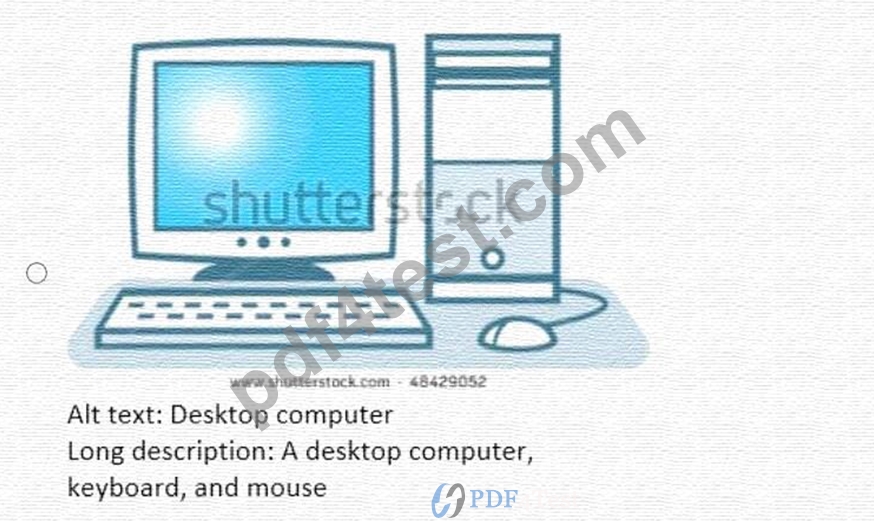
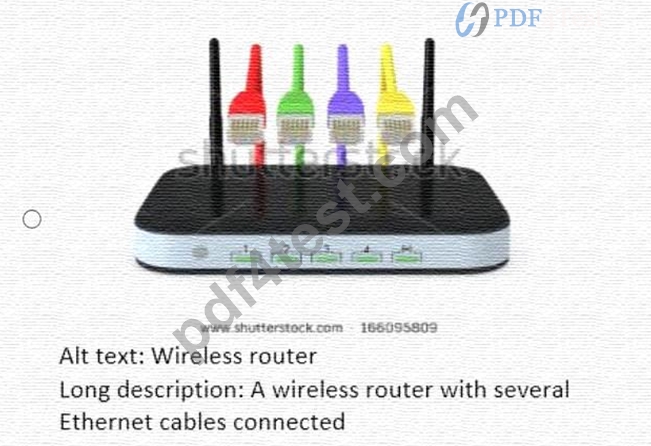
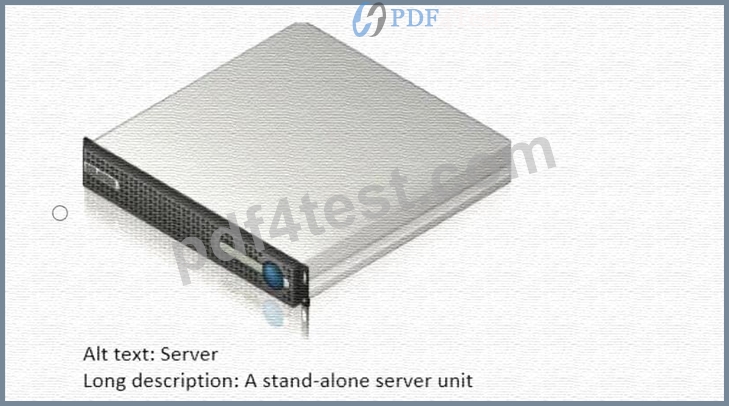
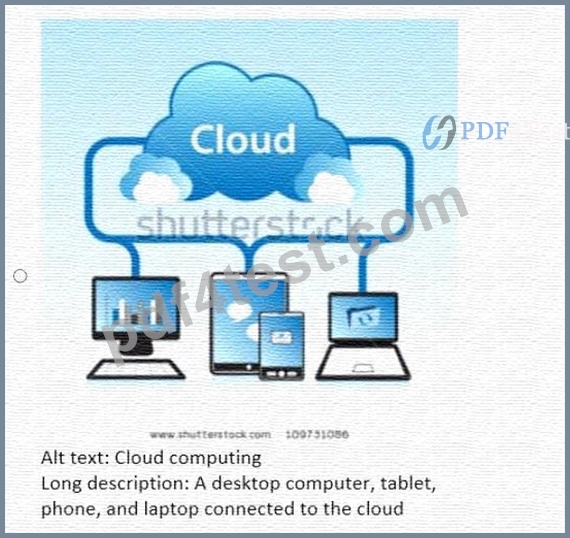
- A. Exhibit B
- B. Exhibit C
- C. Exhibit D
- D. Exhibit A
Answer: C
Explanation:
the basic structure of a computer network is the one depicting cloud computing. In this image, a blue cloud labeled "Cloud" is connected to four different types of devices: a desktop computer, tablet, phone, and laptop.
Each device has an icon representing its type, and all devices are connected to the cloud, symbolizing data access and storage on the cloud.
NEW QUESTION # 28
What is a priority of business continuity?
- A. Critical system replicas
- B. Extensive black-box testing
- C. High on-sight redundancy
- D. Rapid system development
Answer: A
Explanation:
A priority of business continuity is maintaining critical system replicas so essential services can continue or be restored quickly after a disruption. In Information Technology and business continuity planning, organizations identify mission-critical systems and ensure there are standby resources such as replicated servers, replicated databases, or mirrored environments that can take over if the primary systems fail. Replicas support rapid recovery and reduced downtime by enabling failover and restoration without rebuilding from scratch. While on-site redundancy can help with minor failures, business continuity typically emphasizes resilience beyond a single location, since a site-wide incident can disable all on-site resources. Extensive black-box testing relates more to software testing methods than continuity priorities, and rapid system development is a software engineering concern, not the central focus of continuity. Critical system replicas may exist as hot, warm, or cold arrangements depending on recovery time objectives, but the underlying priority is ensuring a working copy of vital systems exists for continuity. Therefore, the correct answer is critical system replicas.
NEW QUESTION # 29
A person is updating procedures for handling integer data within a database. Which value is an example of this data type?
- A. Whether a bank account does or does not have money in it
- B. The number of baseball games in a season
- C. An approximation of pi as 3.14159
- D. A single keystroke from a standard keyboard
Answer: B
Explanation:
Integer data is a numeric data type used to store whole numbers without fractional or decimal parts. In Information Technology and database systems, integers are commonly used for counts, quantities, identifiers, and values that naturally occur as whole numbers. The value "the number of baseball games in a season" is a count and is expressed as a whole number, making it a clear example of integer data. By contrast, 3.14159 includes decimal places and is typically stored as floating-point or decimal data rather than integer. A single keystroke is character data because it represents a symbol such as A or 7, not a quantity. Whether a bank account does or does not have money in it is a two-state condition and is best represented as Boolean data, such as true or false. Using correct data types improves storage efficiency, supports accurate validation rules, and helps ensure correct query behavior. Therefore, the correct example of integer data is the number of baseball games in a season.
NEW QUESTION # 30
Which aspect of the CIA Triad requires that data are correct?
- A. Confidentiality
- B. Integrity
- C. Stability
- D. Availability
Answer: B
Explanation:
1.Integrity: This principle focuses on maintaining the accuracy and trustworthiness of data. It ensures that data remains unaltered and free from corruption. Key points related to integrity:
oData Accuracy: Integrity ensures that data reflects the true state of information. Any unauthorized changes or alterations are detected and prevented.
oHash Functions: Hash functions are commonly used to verify data integrity. These functions generate a fixed-size hash value (checksum) based on the original data. If any part of the data changes, the hash value will also change, indicating potential tampering.
oDigital Signatures: Digital signatures provide a way to verify the integrity of electronic documents. They use asymmetric encryption to sign data, ensuring that it has not been altered since the signature was applied.
oData Validation: Implementing input validation and proper access controls helps maintain data integrity by preventing unauthorized modifications.
2.Confidentiality and Availability:
oConfidentiality: This principle ensures that only authorized users can access sensitive data. It focuses on keeping information private and restricting access.
oAvailability: Availability ensures that authorized users can access data when needed. It prevents data from being unavailable due to system failures, attacks, or other disruptions.
3.Balancing the Triad:
oWhile all three principles are essential, they can sometimes conflict with each other. For example:
Enhancing confidentiality (e.g., strong encryption) may impact availability (e.g., longer decryption times).
Rigorous integrity checks can affect system performance.
oOrganizations must strike a balance based on their specific security requirements.
References
*CSO Online: The CIA triad: Definition, components, and examples
*Comparitech: What is the CIA triad - confidentiality, integrity, and availability?
*Preventive Approach: CIA Triad: A Comprehensive Guide for Beginners
NEW QUESTION # 31
A person is preparing a pizza, which needs to be baked for 18 minutes at 400°F. Which component of the data- information-knowledge-wisdom DIKW hierarchy is exemplified by the value 18 in this scenario?
- A. Data
- B. Wisdom
- C. Information
- D. Knowledge
Answer: A
Explanation:
In the DIKW hierarchy, the value 18 by itself represents data because it is a raw numeric fact without meaning until it is connected to context. In Information Systems fundamentals, data is defined as unprocessed facts such as numbers, symbols, or measurements that do not explain their purpose on their own. The number
18 could represent many things: minutes, dollars, items, or a temperature reading. Once the number is connected to the statement baked for 18 minutes, it becomes information because the data has been given context and meaning. Knowledge would involve understanding how baking time interacts with oven type, pizza thickness, or cooking technique, and being able to apply that understanding to adjust cooking when conditions change. Wisdom would involve making the best overall decision, such as considering health, safety, and preventing burning based on real-world judgment. Since the question asks specifically about the value 18 in isolation, it matches the DIKW definition of data as a raw fact. Therefore, the correct answer is data.
NEW QUESTION # 32
Why is business continuity planning essential?
- A. It ensures that the company will be profitable.
- B. It allows for succession planning.
- C. It ensures that the company will avoid asset loss.
- D. It allows for the quickest return to business operations.
Answer: D
NEW QUESTION # 33
......
Reliable Courses and Certificates Introduction-to-IT Dumps PDF Apr 02, 2026 Recently Updated Questions: https://validtorrent.pdf4test.com/Introduction-to-IT-actual-dumps.html
